

Homo habilis is the earliest named human. But is it even human?

Between 2 million and 3 million years ago, humans appeared in Africa — but identifying them in the fossil record is turning out to be surprisingly difficult. For 60 years, the earliest known human species has also been one of the most mysterious. Homo habilis was added to our family tree in 1964. But it’s long been […]
Indigenous Knowledge Innovation Platform launched to support inclusive bioeconomy growth

UVU Bio, in partnership with the Regional Innovation Support Programme (RISP), hosted by the Council for Scientific and Industrial Research (CSIR), has established a new Indigenous Knowledge Systems (IKS) Product Development Regional Innovation Platform spanning the Western and Eastern Cape. The platform, based on an innovation enablement model, is aimed at supporting indigenous knowledge holders and […]
Falling Walls Lab coming to Gauteng, South Africa

Which wall will your research break? Pitch your innovative idea in just three minutes, showcasing a breakthrough that positively impacts science and society. Details coming soon. Read more
South Africa’s open science policy at a glance

South Africa’s long-awaited open science policy was published this week, months after cabinet approved it in December. The policy makes open access compulsory for all research outputs arising from public funding. Researchers will be required to deposit work in open repositories, and institutions must have data management plans in place for every approved publicly funded project. […]
History of computers: Timeline of key events & technological breakthroughs

The history of computers began with primitive designs in the early 19th century and went on to change the world during the 20th century. Read more
How long does it take the sun to rotate?
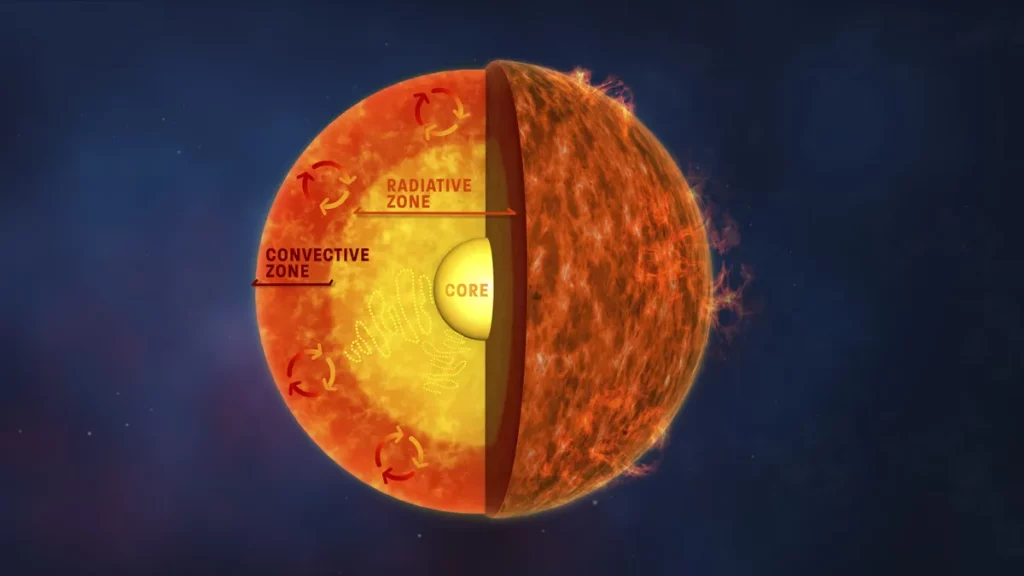
The time it takes for the sun to completely rotate depends where on the sun you are measuring. Many objects in space rotate. Earth completes a spin in roughly 24 hours, while Venus takes a whopping 243 Earth days. The moon’s rotational period is about 27 days. The sun, it turns out, also rotates. So how long […]
Best electric toothbrushes for kids 2026: Fun and effective

From interactive options like the Philips Sonicare for Kids to the unusually shaped AutoBrush Sonic Pro, a child-friendly electric toothbrush can transform a potential tantrum into a fun part of the evening routine. Read more
Will AI ever be more creative than humans?

A new study argues that AI can never be more creative than humans, but many experts argue that AI’s output will only ever be as good as its input — with the goalposts shifting as AI improves in the years to come. Read more
Scientists just got 1 step closer to creating a ‘superheavy’ element that is so big, it will add a new row to the periodic table

Scientists have discovered a new way of creating superheavy elements by firing supercharged ion beams at dense atoms. The team believes this method could potentially help synthesize the hypothetical “element 120,” which would be heavier than any known element. Read more
What is type 5 diabetes? Newly recognized form of the disease gets name

First spotted decades ago but largely forgotten, a newly named form of diabetes stems from undernutrition and is thought to affect millions. Scientists have formally recognized a new type of diabetes, dubbed type 5 diabetes, that is thought to affect 20 to 25 million people worldwide. The condition, which is most common in Asia and Africa, […]